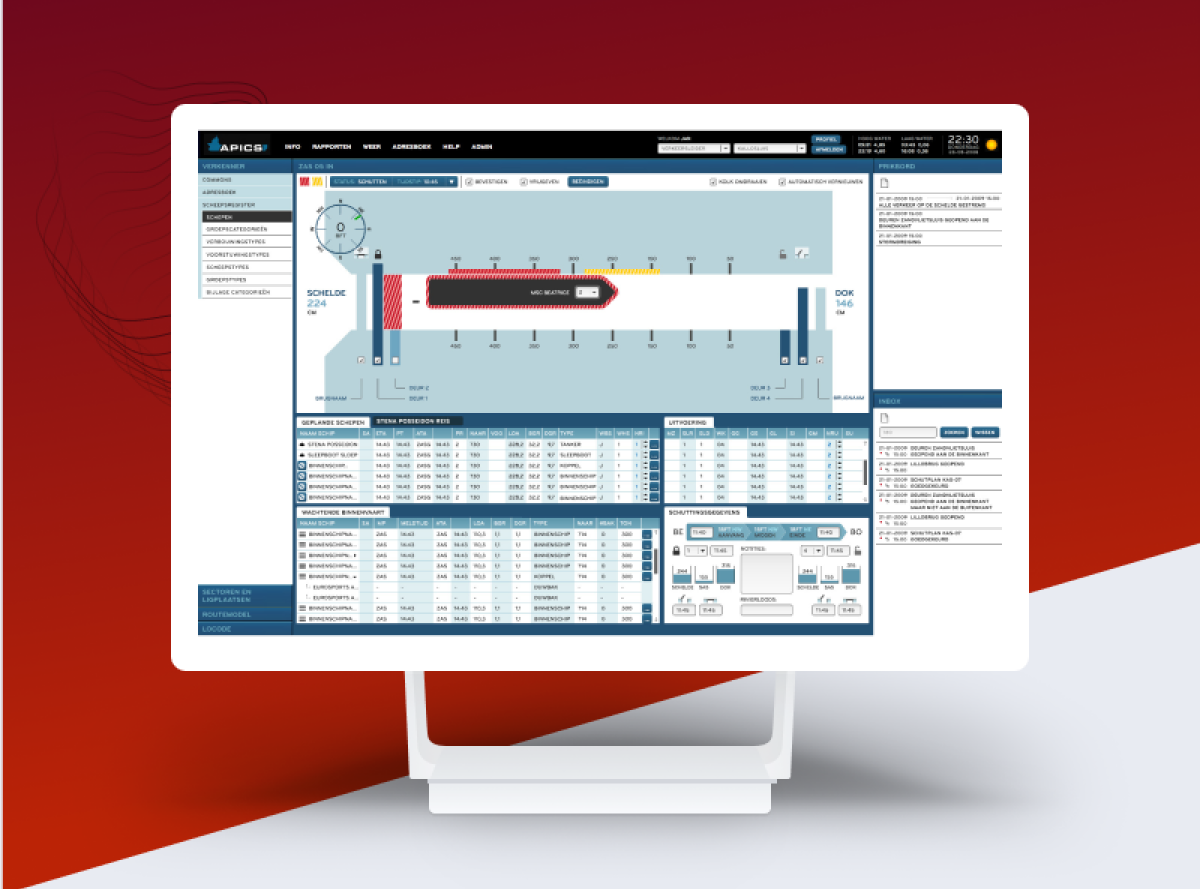
APICS is the abbreviation for the Antwerp Port Information and
Control System. This software platform is the heart of all
maritime traffic around the city of Antwerp.
Over the
years - while employed at an agency called
Nascom - I
worked on various modules and services to improve APICS.
Two of the more critical modules I was responsible for
were the reporting of dangerous goods and the lock scheduling
system.
In this case study we will zoom in on the
lock scheduling system.
400 staff members are now working with APICS, 24/7

The port of Antwerp has a lot of traffic and multiple locks that can only hold so many ships each time they operate. Careful scheduling is required.
Design and develop a GUI that visualizes all ships in the locks and assigns priority on lock entry and departure. Also display weather and water levels.
Worked for 2.5 weeks full time on conducting field research & designing multiple versions of the wireframes. The final visual design was created by Nascom’s art director.
400 staff members work & plan ships 24/7 with the proposed solution. They consider it a massive step forward in their daily workflow.
I started with interviewing harbormasters, lock
planners and tugboat operators. Their jobs proved interesting, but
riddled with dated software. Some of their tools had
no GUI yet and were still command line based.
After
the interviews I visited multiple sites for a
field study.
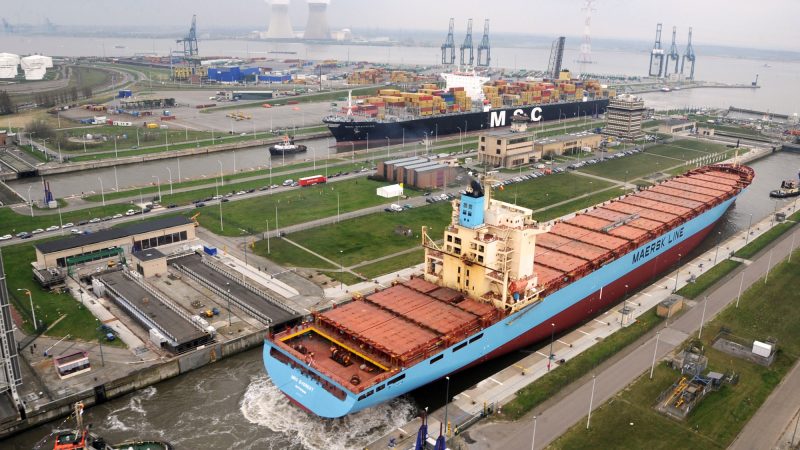
Taking a deep dive in the lives of maritime traffic specialists was needed to understand their daily tasks & communication around lock planning.
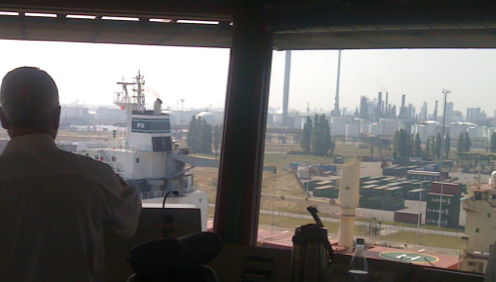
Lock overview towers were key locations in which the application would be used and communication aggregated. They were occupied day & night.
The first versions of my wireframes were focused on usability and
clarity. I tried to visualize only information that was needed in
the moment and hide other information in options and menus.
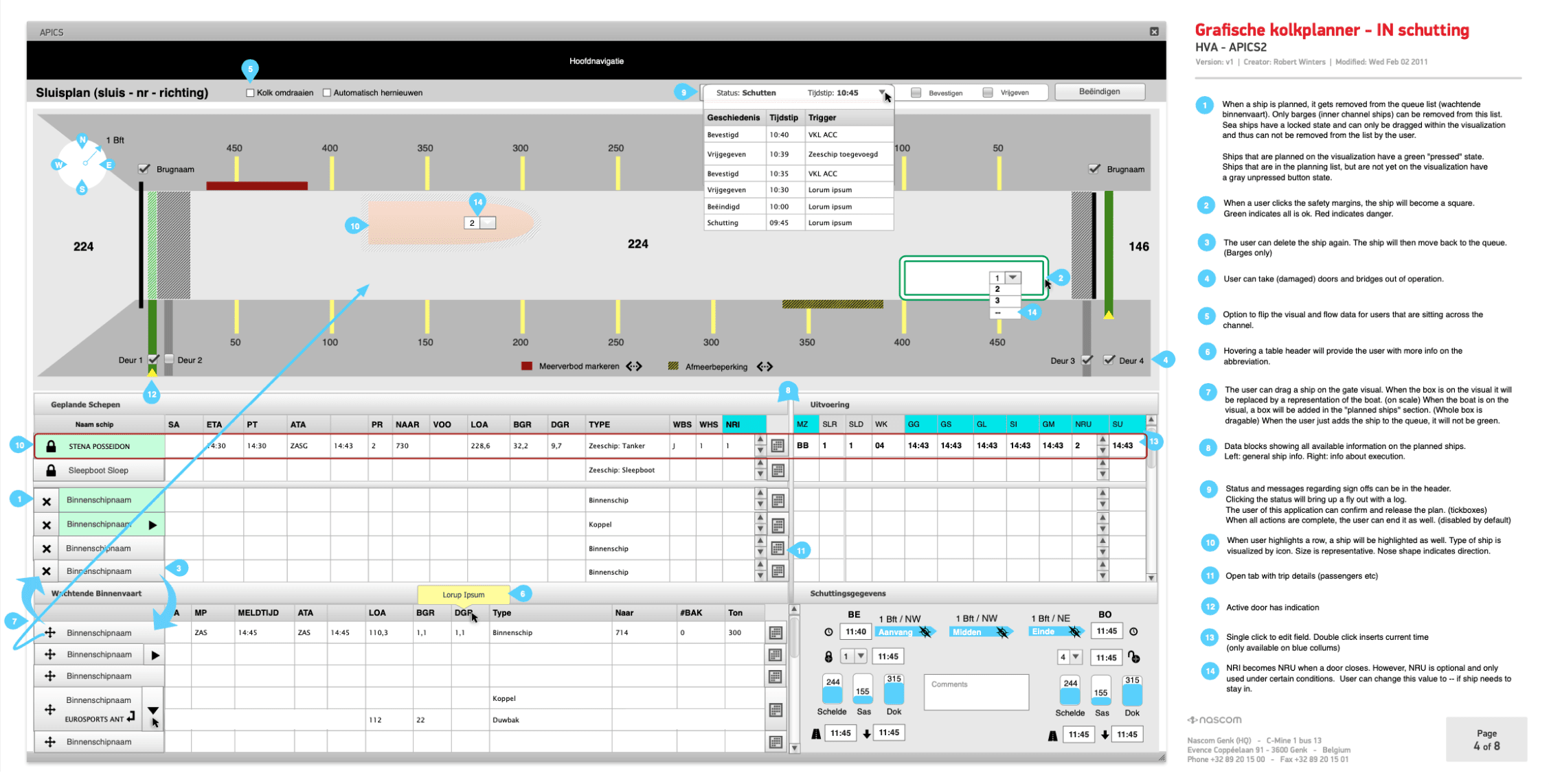
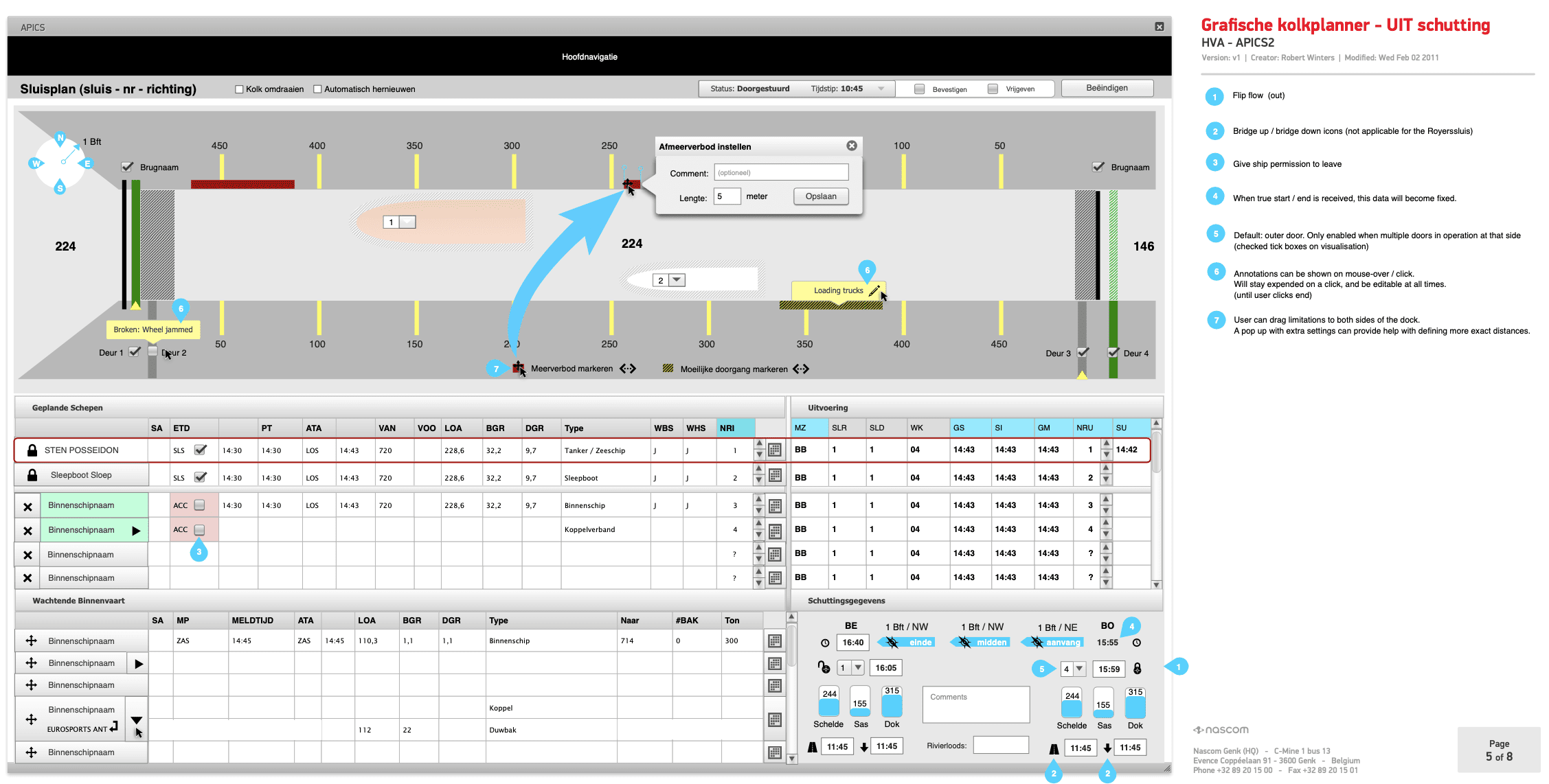
However, during the first workshop with users,
there was significant pushback to this approach.
Users clearly voiced their desire for having as much information
visible as possible.
The final version was challenging,
as it had to strike a balance between avoiding “information
overload”, being comprehensible without too much training and
providing a clear view on the current lock planning situation.
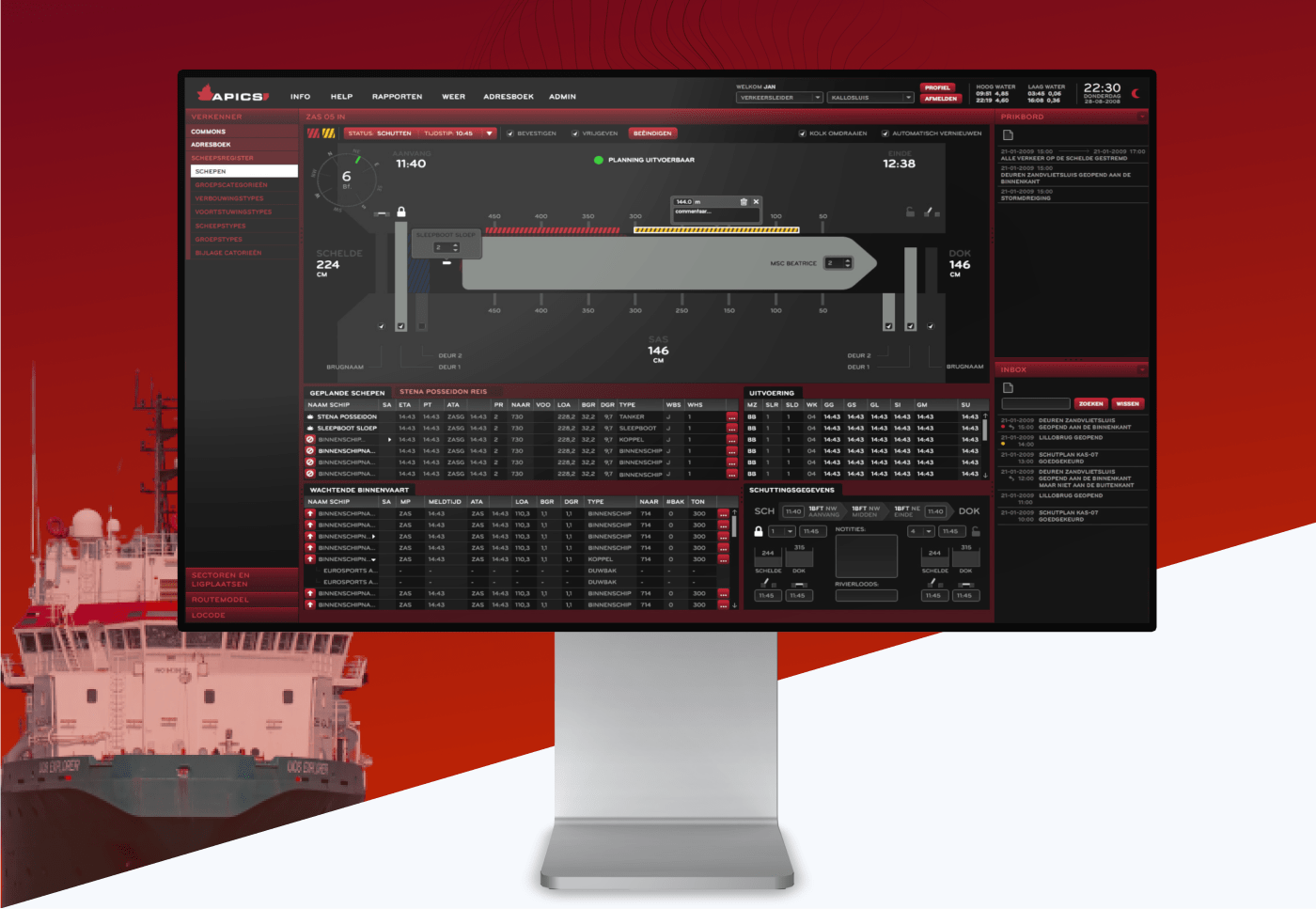
After finding that balance and finalizing the wireframes, I
installed myself next to the desk of Nascom’s art director at the
time. He started working on the visual design which had to
integrate in the existing APICS platform.
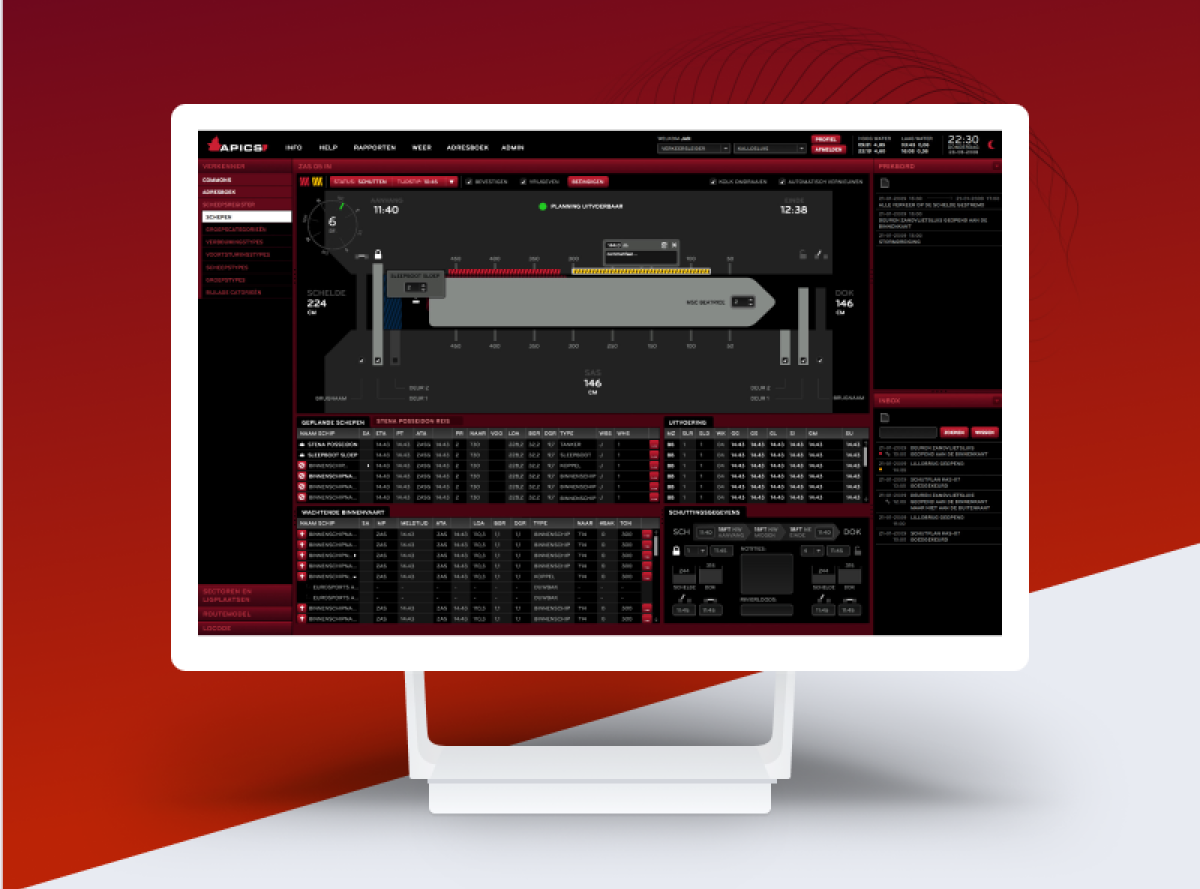
Since the application was going to be used day and night, we also
included a dark mode which was easier on the eyes
during the night.
The final product was developed by
the in-house APICS development team.
Fun side note: one
of the UI's buttons called in helicopter support. 🚁